Box size is the single biggest lever on shipping cost and damage rate, yet it is the decision brands most often get wrong by copying a stock size. This guide shows you how to measure your product, specify interior dimensions, and right-size a custom box so you stop paying to ship air.
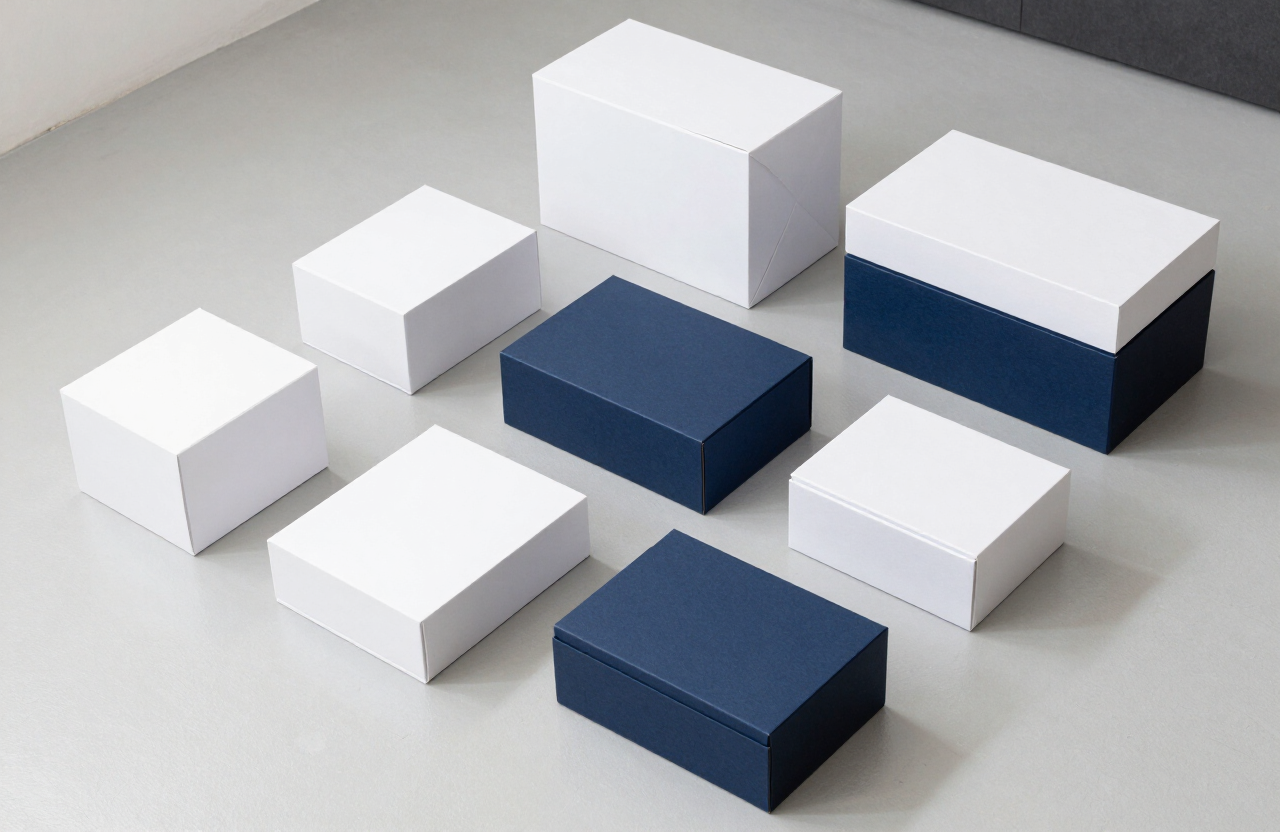
How to measure for a custom box
Custom box dimensions are always interior — the space the product occupies — measured as Length × Width × Height, with the opening on the top. Measure your product at its largest point including any primary packaging, then add 1/8 to 1/4 inch of clearance per side so the product slides in without forcing but does not rattle.
- Length = the longest side of the opening
- Width = the shorter side of the opening
- Height = the depth from opening to base
- Add 1/8–1/4 in clearance per side for fit
- Account for inserts, which add to interior space needed
Interior vs exterior dimensions
Manufacturers quote interior dimensions because that is what fits your product. Stock boxes are often quoted by exterior dimensions, which is why a "10 inch box" can leave your product rattling. Always confirm whether a dimension is interior or exterior when comparing suppliers. At Get Custom Box, every quote is interior.
Right-sizing to cut dimensional weight
Carriers charge on dimensional weight — the greater of actual weight and volumetric weight — so empty space is literally taxed. A right-sized custom box die-cut to your product's real footprint routinely cuts parcel spend by double digits and removes the void fill you were buying to fill the gap. Right-sizing is also a sustainability decision: less board, less truck space, lower emissions.
When to size up
Size up when you need room for inserts, tissue, a thank-you card, or a multi-item order. Size up deliberately for unboxing sequence, not accidentally by copying a stock size. We help you balance protection, presentation and dimensional weight on every quote.
Need a specification for your product? Request a free quote or browse our packaging products.